In short
Elul is the last month of the Jewish year, the thirty days before Rosh Hashanah. Together with the ten days that follow it, it forms a forty day period of reflection and return, teshuvah, before Yom Kippur. Its practices are honest self examination, the shofar, Selichot prayers, charity and repairing relationships.
Welcome to ELULLLLL 🤍
One of my favourite months.. and I hope it will be yours too.
I didn’t grow up knowing what Elul was.
When I moved to Israel, I discovered it and started spending the month in month-long retreats in remote locations immersed in prayer (well I was learning how), inner work, connection and embodiment.
Those months changed the course of my life.
They opened a 14-year journey into Torah, Kabbalah and Chassidut, and ultimately brought me here - sharing all I learnt, and continue to learn, with you.
Elul is the month before Rosh Hashanah.
Every year, the Jewish calendar gives us
40 days to pause, reflect, and begin again.
The Gregorian calendar and the world at large starts the “new year” in January with
RESOLUTIONS.
But the genius of the Hebrew calendar is that we start the year with
REFLECTION.
Last night we started The New Year Reset our 30 day journey with a group of AMAZING WOMEN from around the world. BH I am so overjoyed. Yes you can do the work alone, but something about doing it together that is just.. yes. You can still join.
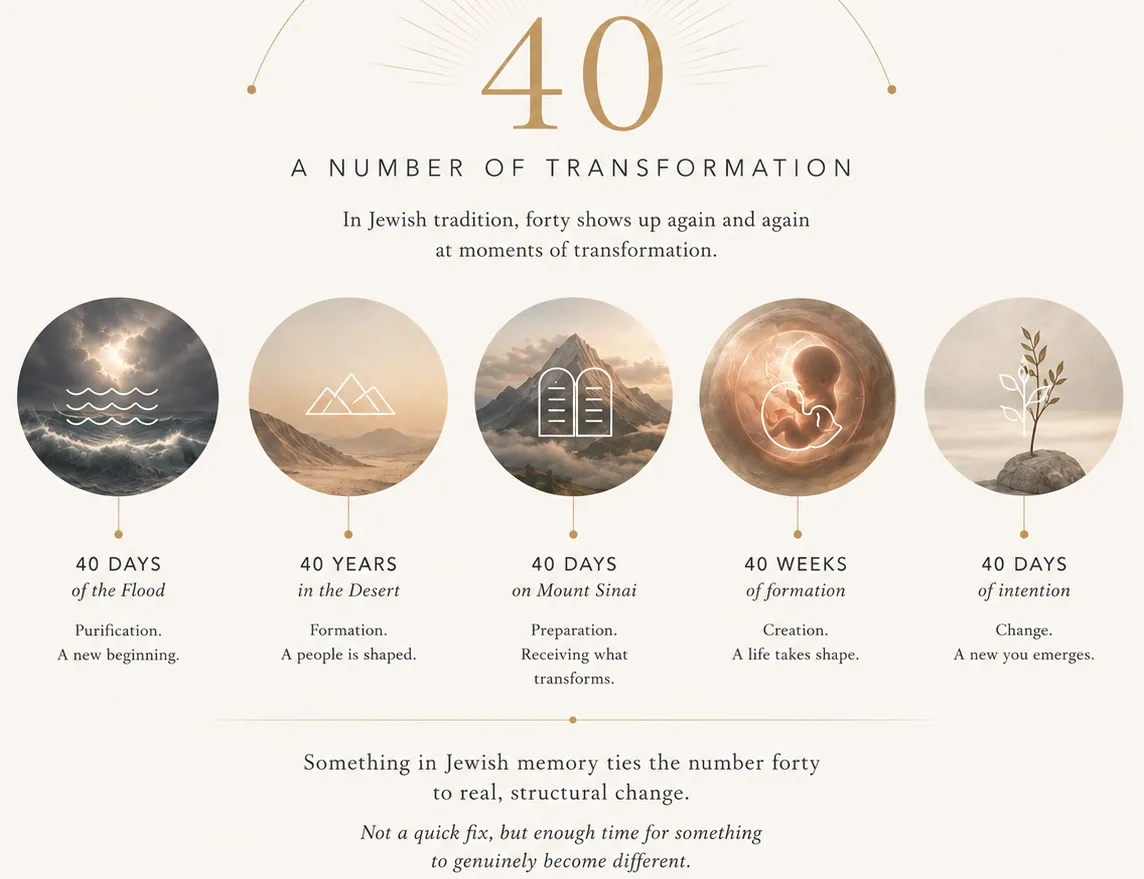
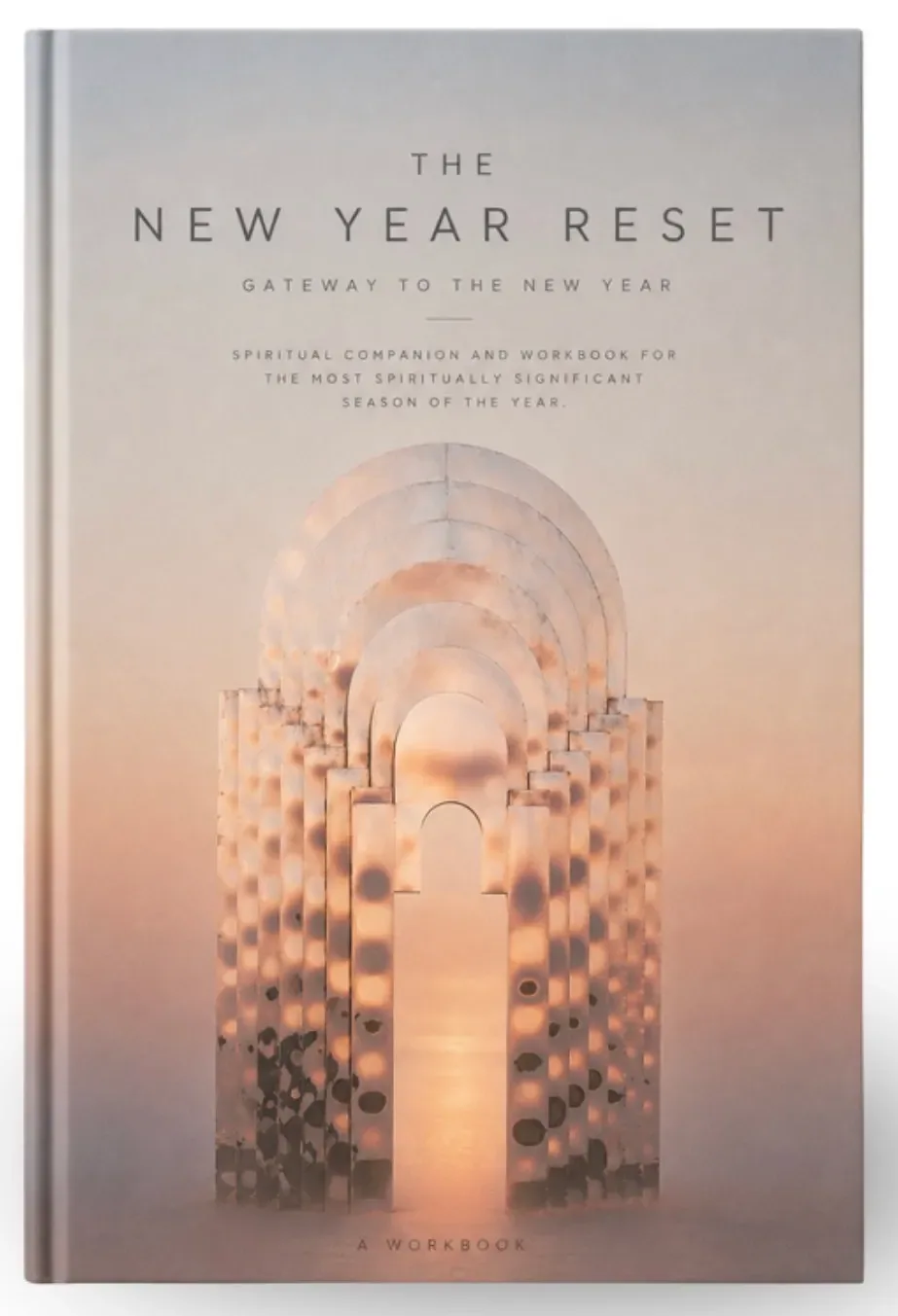
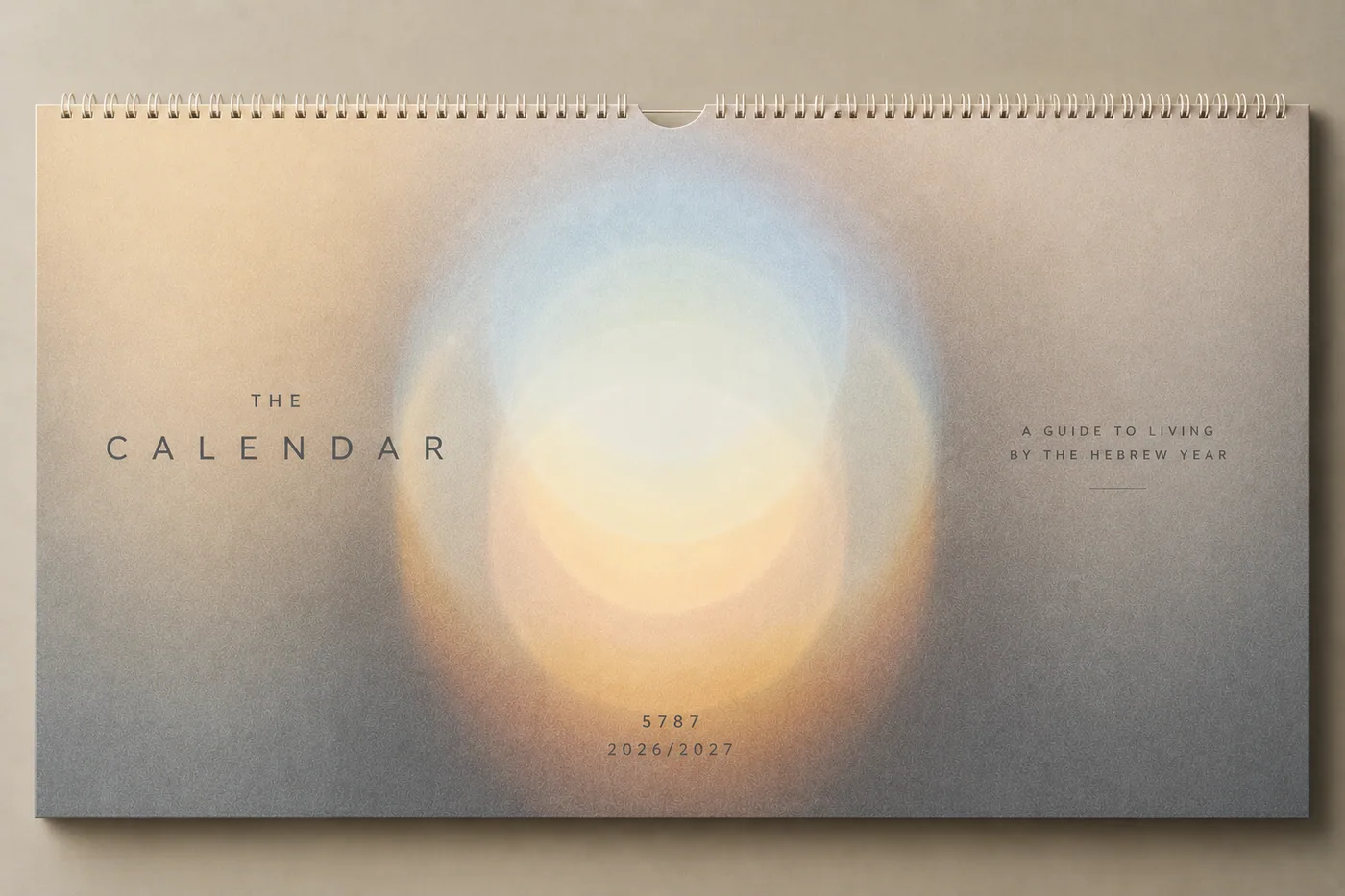
Image from The New Year Reset Guide: The Spiritual Companion to Elul & The High Holidays.
40 DAYS OF TRANSFORMATION
Elul is the gateway to the new year. It is the bridge, the womb. It carries us from the year that was into Rosh Hashanah, and then through the Ten Days of Teshuvah toward Yom Kippur.
30 days of Elul + 10 days until Yom Kippur.
The number 40 is not random.
In Jewish tradition, 40 shows up again and again at moments of transformation.
Forty days of the flood.
Forty years in the desert.
Forty days on Mount Sinai.
Forty weeks of formation of a baby in the womb.
Something in Jewish memory connects 40 with real structural change - with
TRANSFORMATION.
And I love that we aren’t asked to transform our entire lives overnight.
You can choose
one thing
that you want to focus on for these 40 days.
You don’t need to overhaul everything.
Choose one thing. Stay with it. See what happens.
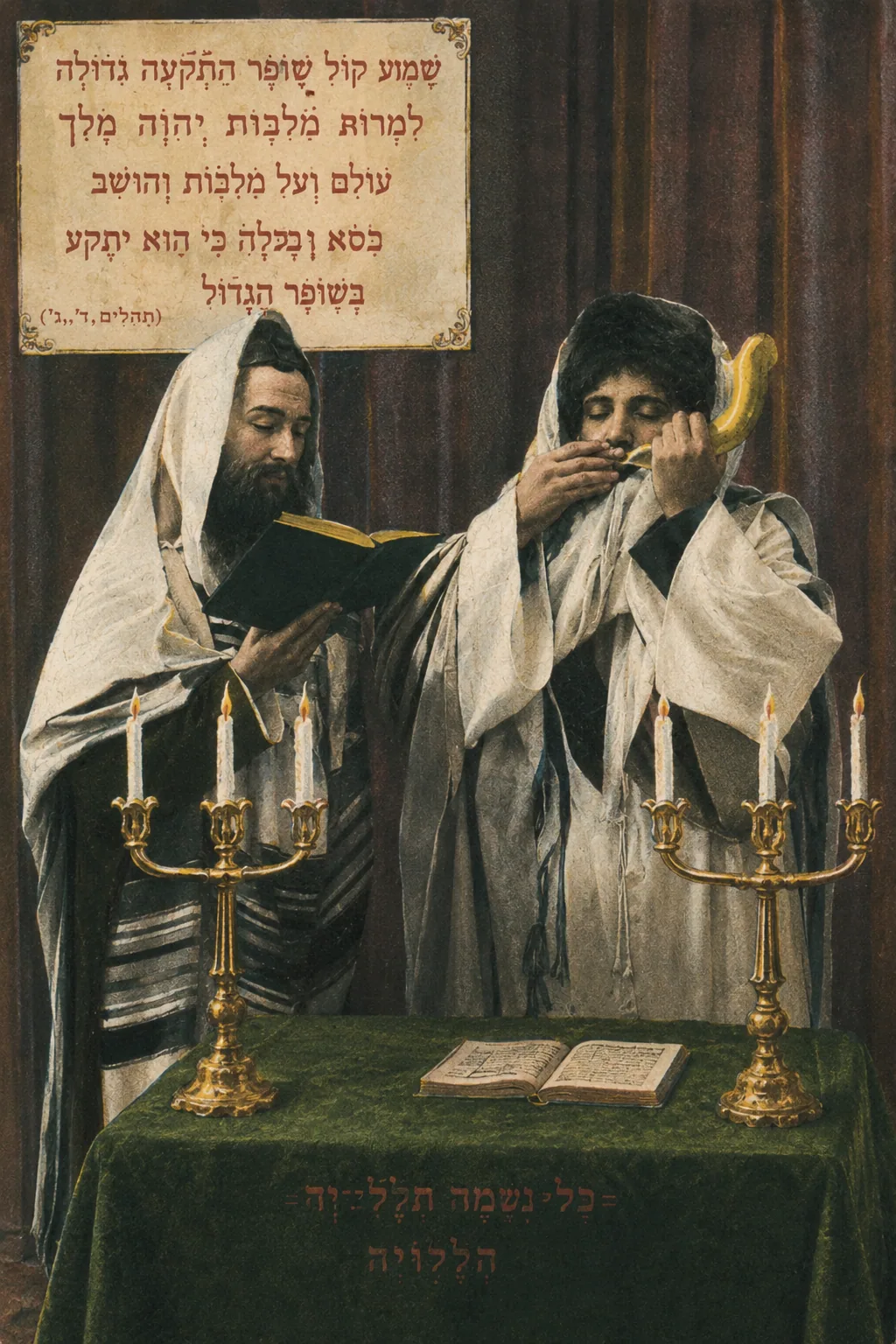
A cool vintage postcard I found.
THE ART OF RETURN — TESHUVAH
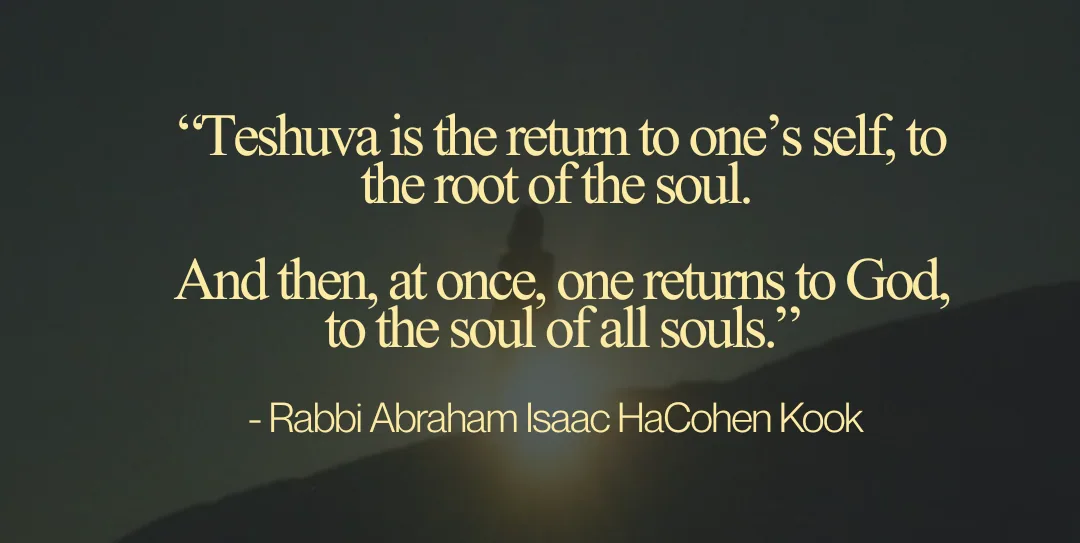
At the heart of Elul is
Teshuvah.
Teshuvah is often translated as repentance, but the word actually means
return.
Return to what?
To who you truly are.
And to where you are
RIGHT NOW.
Before changing anything, Teshuvah asks us to stop and see our lives honestly.
What is true for me right now?
What am I avoiding?
Where am I out of alignment?
What needs my attention?
What am I resisting?
What patterns keep repeating?
What limiting beliefs do I have?
We so often want to jump straight into creating the new future.
Set the goals. Resolutions. Manifest. Become someone different.
But Elul asks us to begin somewhere much simpler:
Come back to where you truly are.
Look at yourself with honesty, with rawness, with
T.R.U.T.H.
And when we become willing to see where we actually are, something deeper becomes possible.
We can begin to remember who we actually are.
Beneath our habits, fears, expectations, mistakes and the identities we’ve accumulated, Judaism teaches that there is something deeper within us:
our Neshama.
Our divine soul.
Our essence identity.
It isn’t something we need to create.
It is something we can return to.
You don’t need to become. You need to reveal.
Your light was always there. The work is simply to uncover what has been hidden.
OUR TRIBAL TRADITIONS
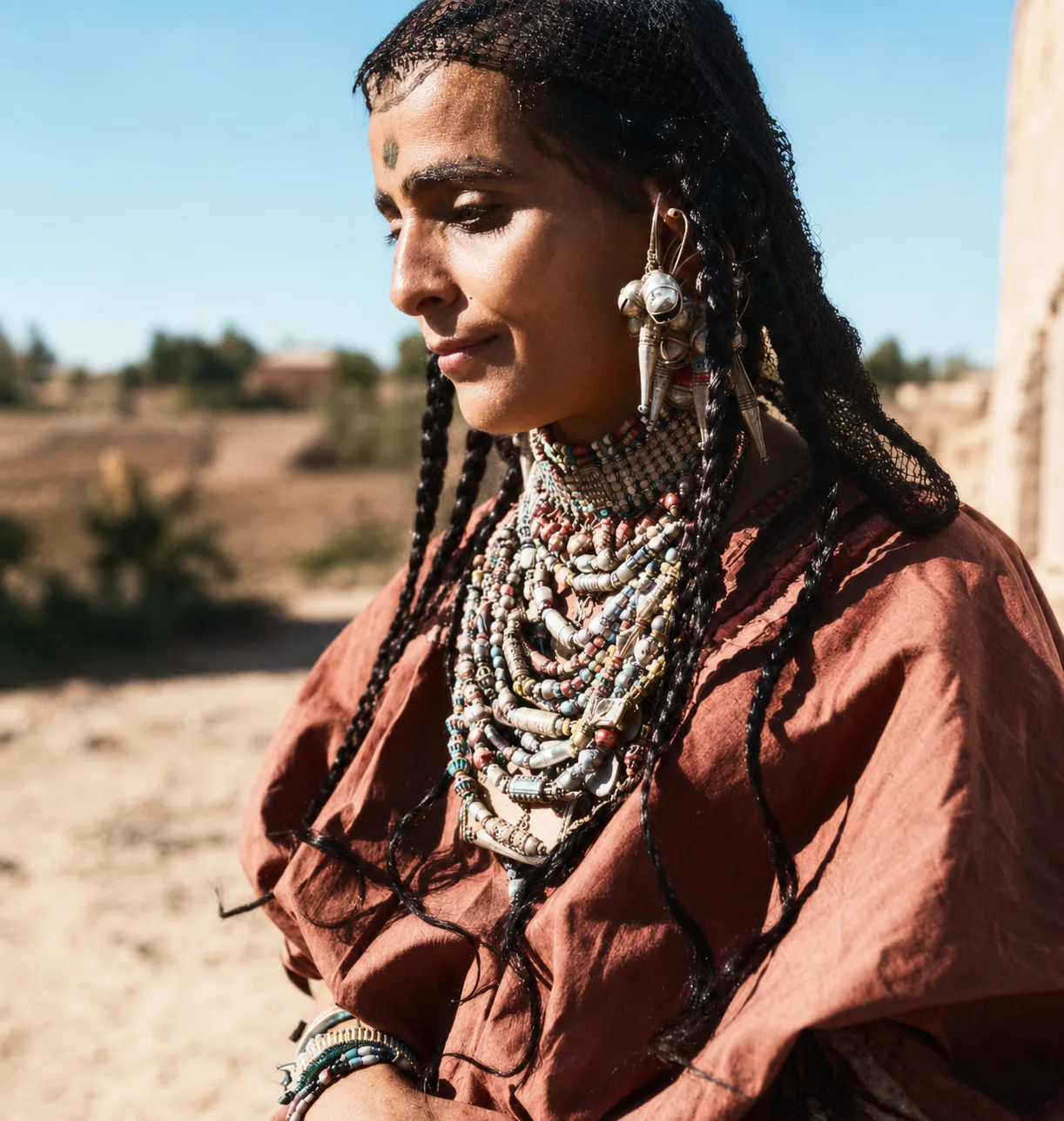
Judaism is an embodied spiritual tradition.
One of the things I love about it how we use sound, instruments, song and embodiment to connect to Hashem.
We blow Shofar (horn) — To Wake Up
Sing
Selichot — Forgiveness
Do
Teshuvah — Return
Tefillah — Prayer
Give
Tzedakah — Giving/Charity
The shofar is a wake-up call.
For thousands of years, our people have gathered and blown this horn, carrying an ancient human sound through generations.
It connects us to something older than language.
Selichot are prayers of forgiveness and return.
We sing them.
Chant them.
Repeat them after midnight.
And through those melodies and cries, we connect to generations before us.
PRACTICAL SPIRITUALITY
Elul really teaches us how practical Jewish spirituality is.
It’s the month where we are encouraged to give extra charity.
Where we have to sit in front of our ex-friends and have the uncomfortable conversations.
It is uncomfortable.
It is deeply human.
And this is what I love about it.
Because our Torah literally brings
heaven to earth.
SO WHAT DOES THAT ACTUALLY LOOK LIKE?
A
Cheshbon Nefesh - an accounting of the soul.
Looking at different parts of your life - self, relationships, love, family, purpose, money, body, spirituality - and asking:
Where did I say yes when I knew I needed to say no?
Where have I acted from fear instead of truth?
What am I avoiding looking at? What am I resisting
If you feel called to use these 40 days for something deeper, I created The New Year Reset for you.
- a companion to help you slow down, reflect, and move through Elul with intention.
THE SPIRITUAL GUIDE TO THE HIGH HOLIDAYS 40 Days · Elul to Rosh Hashanah to Yom Kippur The New Year Reset
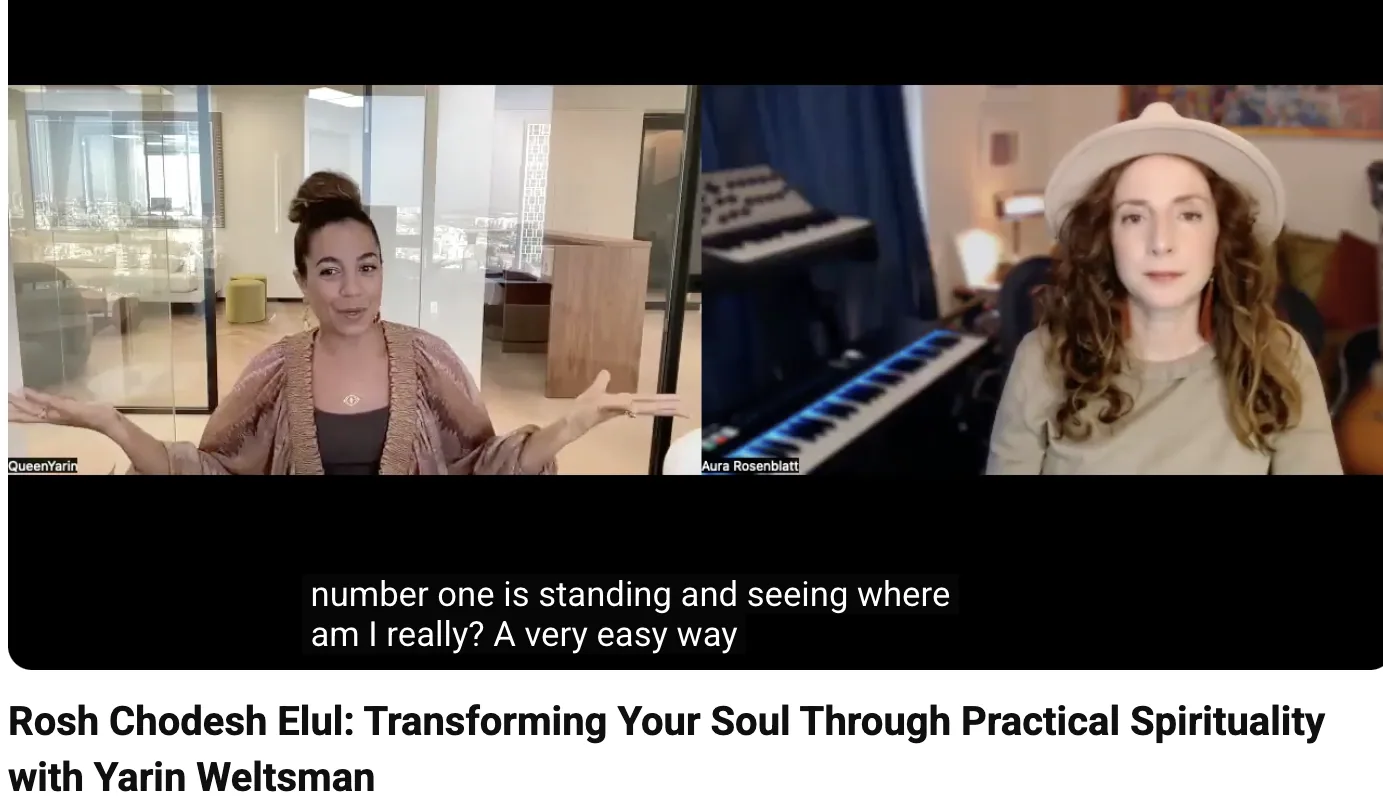
PS I was on an epic podcast this week it was all about PRACTICAL SPIRITUALITY with Aura Rosenblatt - we dove into the month and how you can practically use this time in your busy life.
Happy Elul everyone - there is so much more to share, but for now Shabbat Shalom
Written by Yarin Weltsman (Queen Yarin)
About Yarin →Questions people ask
What is the month of Elul?+
Elul is the sixth month counting from Nissan and the final month of the Jewish year, falling in late summer. It is dedicated to reflection and preparation for Rosh Hashanah and Yom Kippur.
What does teshuvah mean?+
Teshuvah is usually translated as repentance, but the word means return: returning to who you truly are and looking honestly at where you actually are before trying to change anything.
Why forty days?+
Thirty days of Elul plus the ten days until Yom Kippur. Forty recurs in Jewish tradition at moments of structural change: forty days on Sinai, forty years in the desert, forty weeks of pregnancy.