In short
Miriam, the sister of Moshe and Aharon, is called a prophetess in the Torah. She appears at the Nile, at the splitting of the sea, in the episode of lashon hara, and at her death in the desert, when the miraculous well disappears. Tradition credits three desert miracles to the three siblings, and the well, the lower waters, belongs to her.
Miriam appears only four times in the Torah.
And yet, her spiritual footprint carries an entire archetype of feminine leadership.
She places baby Moshe into the basket in the Nile who is later rescuer by Batya (daughter of Pharoah)
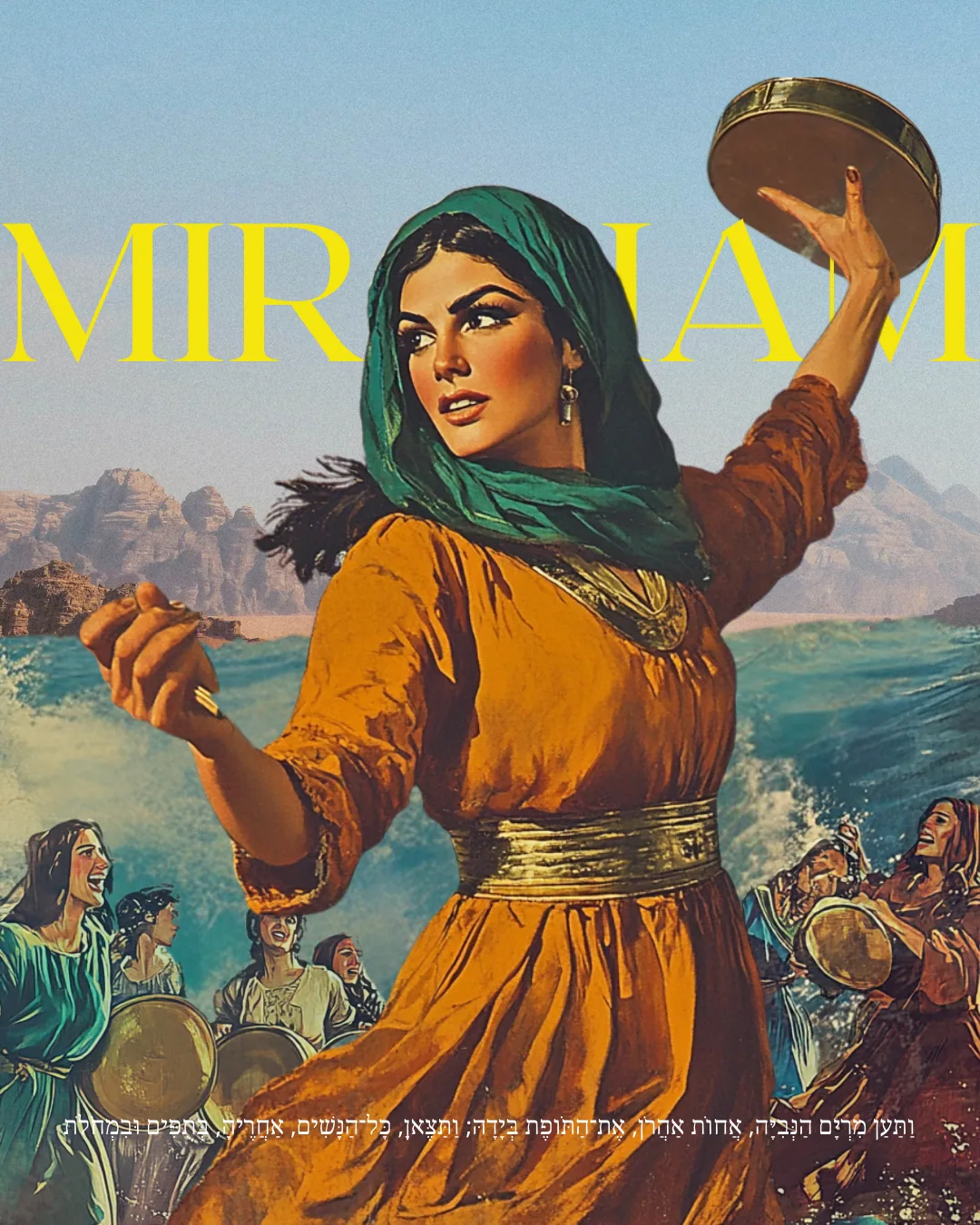
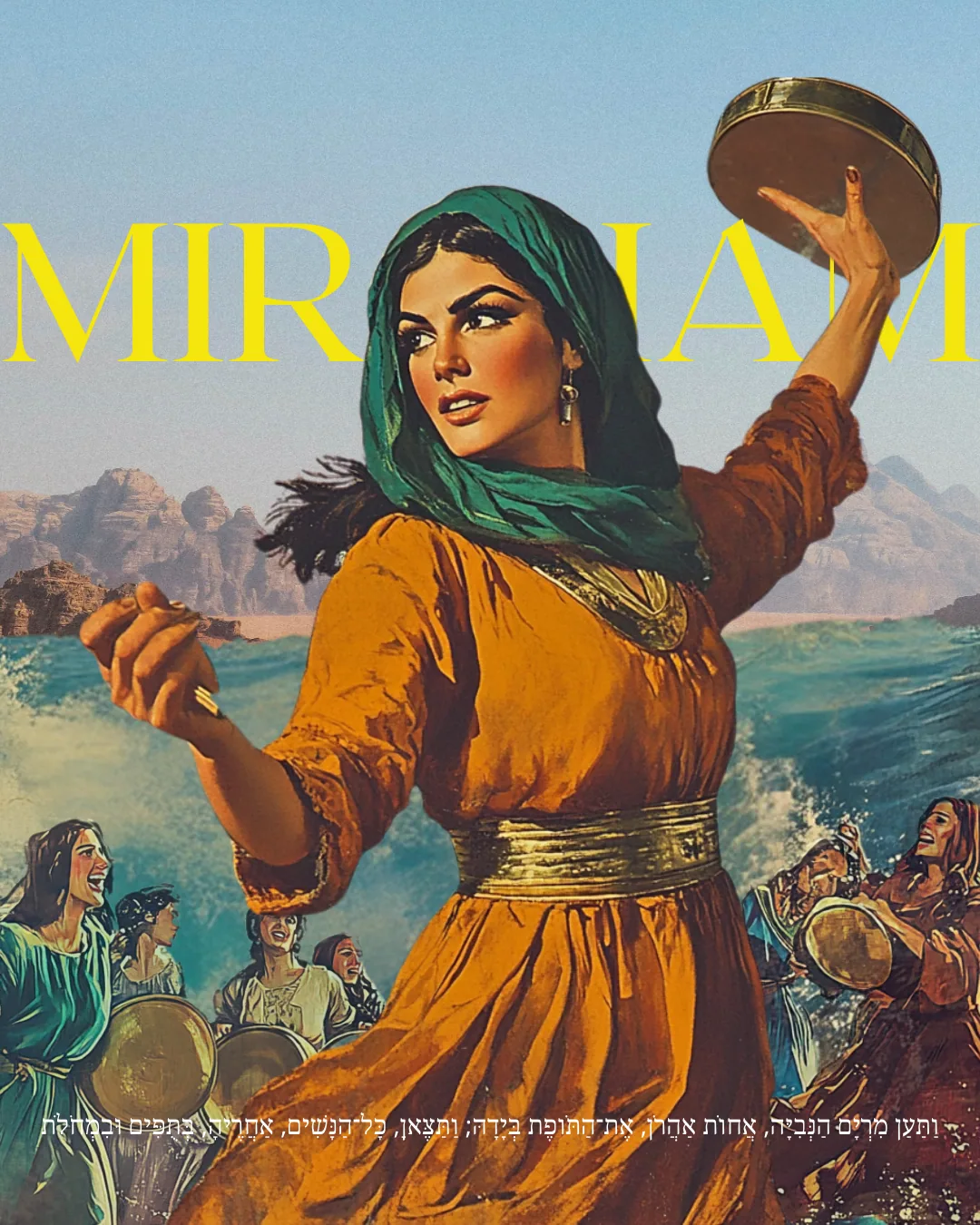
She leads the women in circle dances after the splitting of the sea.
She speaks lashon hara and is struck with tzara’at.
She dies in the desert, and with her death, the miraculous well disappears.
Four moments.
Four initiations.
Four revelations of the feminine soul in Jewish history.
Miriam is often described as the “valley” between her two towering brothers — Aharon and Moshe.
But this is a matter of perspective.
Flip the landscape, and she becomes the mountain between two depths.
The Water Motif: Miriam’s Element
Miriam’s entire life is braided with water.
• The Nile River - where she places Moshe in a basket
• The splitting of the sea - where she leads the women in song and dance
• The Be’er - the miraculous well she carries for Am Yisrael through the desert
Water is not incidental to her story.
It is her spiritual signature.
The Midrash teaches that Am Yisrael was given three miracles in the desert, each corresponding to one leader:
• Aharon — the Amud Anan (pillar of cloud)
• Moshe — the manna, covered in dew
• Miriam — the Be’er (the well)
All three are expressions of water.
Two represent the upper waters.
One represents the lower waters.
And Miriam is the bridge between them.
The Well: Feminine Connectivity
The Midrash says that Miriam’s well traveled with the entire nation.
It didn’t just provide water.
It connected all the tribes.
There is even a teaching that when women wanted to visit friends in other camps, they would take small boats across the waters surrounding the well.
Miriam was constantly connected to her inner spring.
And because of that, she could connect the root souls of everyone around her.
Her leadership wasn’t centralized.
It was relational.
Not vertical.
Horizontal.
Not hierarchical.
Interconnected.
This is feminine leadership in its pure form.
Miriam and the Feminine Completion of Redemption
Moshe brings the people through the sea.
Miriam brings the people back into their bodies.
After trauma, redemption cannot remain abstract.
It must be embodied.
It must land in rhythm.
In breath.
In voice.
In movement.
Miriam’s dance is the first collective somatic healing ceremony in Jewish history.
She teaches us that redemption is incomplete if it stays intellectual.
It must descend into the hips, the feet, the nervous system, the feminine psyche.
This is why she is called a prophetess.
Prophecy isn’t just predicting the future.
It is perceiving the deeper pattern of reality and teaching others how to live in alignment with it.
Feminine Leadership Is Not Soft. It Is Structural.
True feminine leadership is:
• Empathetic
• Bottom-up
• Relational
• Embodied
• Internally coherent
• Problem-solving from within
Written by Yarin Weltsman (Queen Yarin)
About Yarin →Questions people ask
Why is Miriam called a prophetess?+
The Torah names her a prophetess. In this reading prophecy is not prediction but perceiving the deeper pattern of reality and teaching others to live in alignment with it.
What was Miriam's well?+
The Midrash describes a miraculous well that travelled with the Jewish people in the desert in Miriam's merit and disappeared when she died.